How the FDA Kills a Drug

Mar 13, 2026
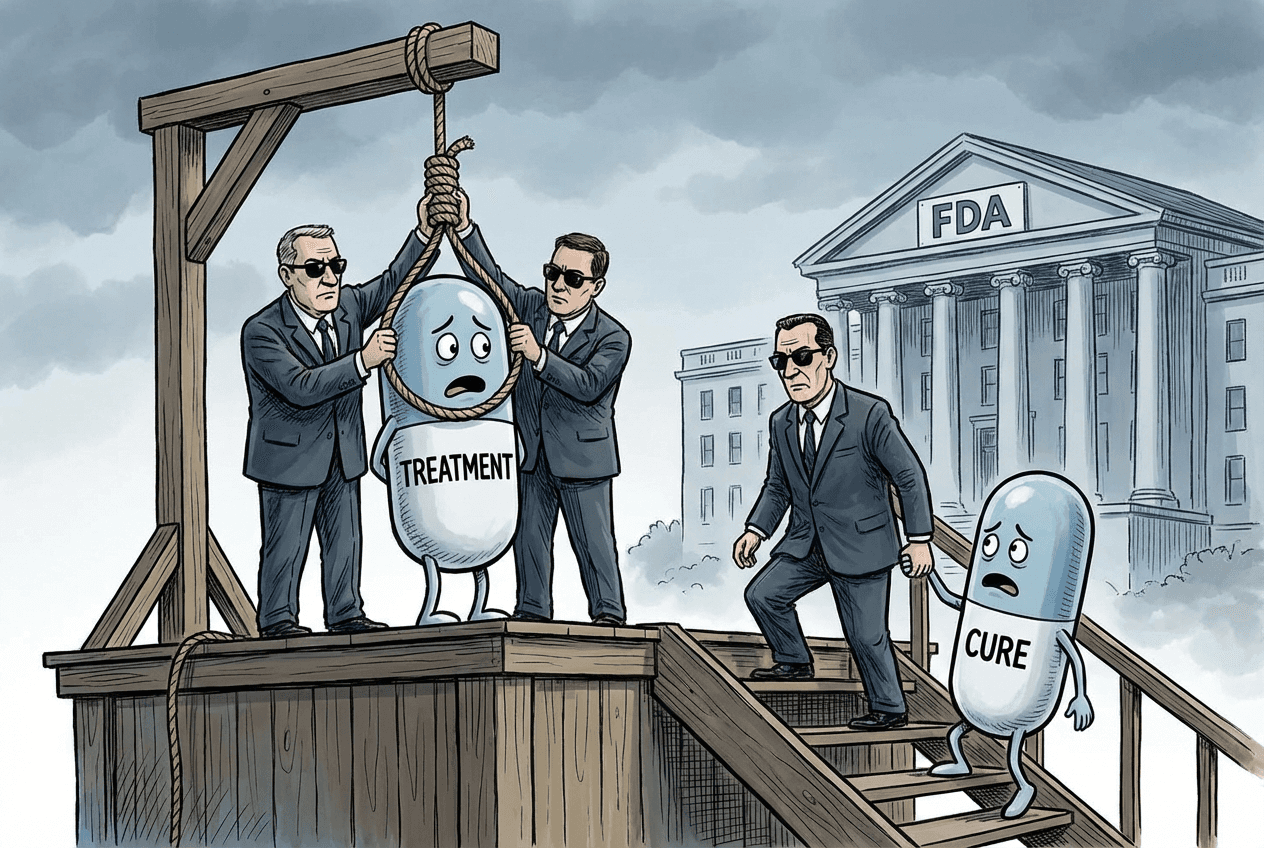
By Editorial Board, March 13, 2026 | From: The Wall Street Journal
Food and Drug Administration Commissioner Marty Makary announced last week that biologics chief Vinay Prasad will step down at the end of next month. Hallelujah. We hope the agency will stop torpedoing promising drugs, but the story of biotech firm Sydnexis’s battle with the bureaucracy suggests more obstacles ahead.
Sydnexis has spent a decade developing atropine eye drops that slow the progression of pediatric myopia, a growing problem. Myopia typically develops in early childhood and progresses until a child stops growing. Genetics plays a role, and screen-time increases the risk. Rates have soared with smartphone use.
The company’s three-year randomized controlled trial succeeded on the key benchmarks the FDA set years earlier, reducing progression by about a third among children under 12 and more among the fastest progressors at the start. Yet the FDA rejected Sydnexis’s drug last October because benefits weren’t “clinically meaningful” in its view.
Why not? Because some children would still need glasses since the eye drops don’t completely stop or reverse nearsightedness. Maybe, but children wouldn’t have go to the eye doctor as often to get prescriptions for new lenses. Severe myopia increases the risk of cataracts, glaucoma and retinal detachment later in life. Reducing nearsightedness can prevent these eye diseases.
In any case, the FDA’s job is to review drugs for safety and efficacy. Let doctors and patients decide whether the benefit is meaningful. The FDA’s rationale echoes the paternalistic mindset of Dr. Prasad. He has scuttled rare disease drugs because, in his view, they aren’t worth the cost since they don’t cure all patients, even if they slow progression and reduce symptoms.
Sydnexis invited Robert Clark, a renowned pediatric ophthalmologist, to accompany its executives to a meeting with FDA staff last month to address the agency’s criticism. It was clear the FDA reviewers “did not understand the disease at all,” Dr. Clark tells us. A staff statistician at the meeting claimed the eye drops’ benefits diminished over time, but this was incorrect.
Progression slowed in both the placebo and the atropine groups in the later years of the trial, but that’s to be expected because myopia slows as children grow up. This is “obvious to anyone who understands myopia,” Dr. Clark says. Dr. Clark pressed the statistician to define what the FDA considered to be “clinically meaningful.” The staffer refused.
Without a definition of “clinically meaningful,” Dr. Clark says, “you have no idea what they were looking for.” An FDA ophthalmologist at the meeting didn’t speak at all. Was she familiar with the data?
Sydnexis is appealing the FDA rejection through the agency’s administrative process with the hope that agency leaders will take a less shortsighted view. “We don’t see any of this common-sense approach you hear about from the top” of the FDA, says CEO Perry Sternberg. Rare disease drug developers have also noted a disconnect between Dr. Makary’s rhetoric and agency actions.
Regulators in Europe and the U.K. approved Sydnexis’s eye drops last year. Sydnexis executives say the review process in Europe was seamless and transparent.
Sydnexis’s drug doesn’t fall under the direct purview of Dr. Prasad since it’s a small molecule. But he has intervened in reviews and jettisoned other drugs that fall outside his bailiwick. The FDA has long had an entrenched culture of bureaucratic control, but biotech firms say it has become worse this past year.
Dr. Prasad has encouraged FDA staff to review applications skeptically and forced out veterans who clashed with him on drug reviews. This has resulted in the FDA moving trial standards and nixing drugs for arbitrary reasons. Wisconsin Sen. Ron Johnson this week said he plans to investigate the FDA’s rejections of rare disease drugs. Glad to hear it.
The Sydnexis case suggests that the agency’s problems are broader than rare diseases. Congress may need to use its oversight authority to force the radical transparency that Dr. Makary keeps promising.
Appeared in the March 14, 2026, print edition as 'How the FDA Kills a Drug'.
Type something …
Search
Latest Post

The FDA turned down 2 earlier applications
Aug 6, 2026